30,000: The Price Tag Behind Tesla’s End-of-Year Cybercab Push
Tesla confirms that its two-seat, driverless robotaxi will be available for private purchase by the end of 2026, though most units will remain in the company’s own fleet.
By Ahmed Mansour ·
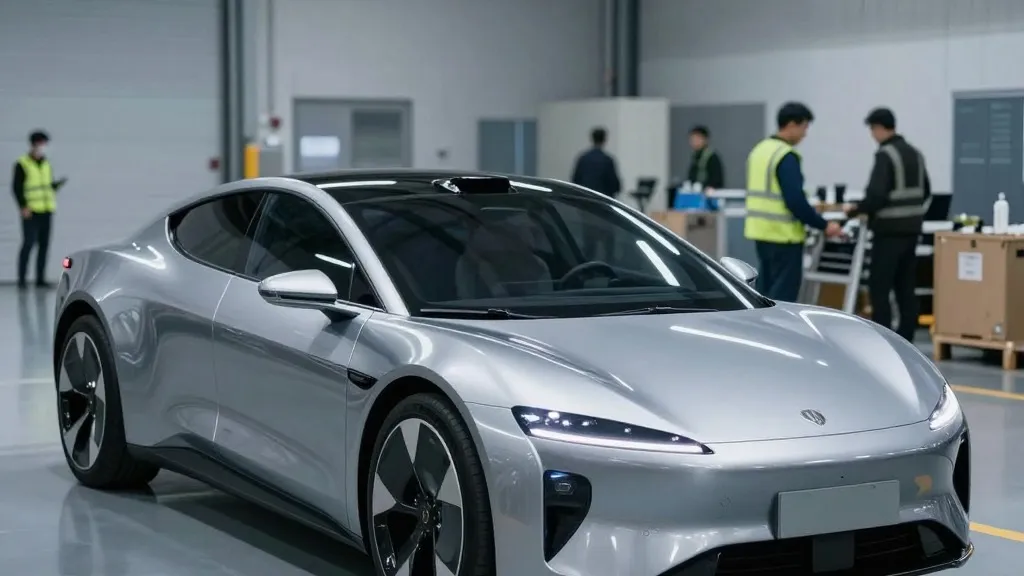
For years, the conversation around Tesla’s most radical vehicle design has been defined by a single, ambitious price point: thirty thousand dollars. That figure is no longer just a marketing target; it is the anchor for a concrete timeline. As of this week, the company has confirmed that its purpose-built, two-seater robotaxi, known as the Cybercab, is on track to reach private customers before the calendar year ends. This announcement, made during the third-quarter 2026 earnings call on October 21, effectively closes the door on months of speculation regarding whether this fully autonomous vehicle would ever be available to the general public in the near term.
The path to this milestone has been rapid but methodical. Production of the Cybercab began at the Gigafactory Texas in February, marking the start of a new manufacturing chapter for the company. For the first several months, the vehicle was kept out of the consumer market entirely. Instead, early units were integrated directly into Tesla’s internal operations. By early September, the company launched its public rideshare service, placing these initial vehicles into the Robotaxi fleet to gather real-world data on autonomous performance and user interaction. This phased approach allowed the engineering team to validate the hardware and software systems without the added complexity of private ownership logistics.
Lars Moravy, Tesla’s Vice President of Engineering, provided the specific details on the upcoming transition to private sales. He stated that while production is currently underway, every unit rolling off the line is being assigned to the company’s own internal Robotaxi fleet for the time being. However, as operations scale and the company gains confidence in its delivery logistics and fleet management systems, the focus will shift. Moravy noted that Tesla aims to deliver these fully designed autonomous vehicles to customers in small batches initially. This cautious rollout is intended to help the company navigate the complexities of ownership models and operating autonomous vehicles outside of its direct control.
CEO Elon Musk reinforced the idea that the Cybercab is not a traditional personal vehicle. In a statement shared during the earnings period, Musk described the car primarily as a "transport-as-a-service" offering. He emphasized that the "vast majority" of Cybercabs will be owned and operated by Tesla itself. This distinction is crucial for potential buyers; unlike the Model 3, Model Y, or the upcoming Roadster, the Cybercab is designed more as a utility for shared mobility than a personal commuter car. It lacks a steering wheel and pedals, relying entirely on the company’s Full Self-Driving suite to navigate traffic.
The shift to private ownership comes with a set of technical and regulatory hurdles that the company must navigate. Ashok Elluswamy, Tesla’s Head of AI, indicated during the call that unsupervised Full Self-Driving capabilities are expected to ship to consumer cars during the second quarter of 2027. This timeline suggests that early Cybercab buyers in 2026 may receive vehicles whose autonomous operation remains geographically restricted. These restrictions are often due to lagging regulatory agencies that have not yet fully approved unsupervised operation in specific areas. Buyers should expect that their vehicle’s range of autonomous capability may be limited to certain "geofenced" zones initially.
The decision to open the Cybercab to private customers is a strategic move to diversify revenue streams beyond the Robotaxi fleet. By selling a portion of the production volume to individuals, Tesla can generate immediate capital while continuing to build its data library through the larger, company-owned fleet. The thirty thousand dollar price point remains a key selling proposition, positioning the vehicle as an affordable entry into autonomous mobility. However, the limited nature of these private sales means that the Cybercab will remain a niche product for the time being, with the bulk of the vehicle’s lifecycle spent serving the public via the Robotaxi service.
As the year comes to a close, the focus for Tesla’s engineering teams will be on refining the delivery process. The company must ensure that the transition from factory to customer is smooth, particularly given the lack of traditional controls like steering wheels. This involves new logistics for charging, maintenance, and software updates. The company’s goal is to prove that a driverless vehicle can be a viable personal asset, not just a shared resource. The success of these initial deliveries will likely determine how quickly Tesla scales up private sales in the coming years.
For now, the thirty thousand dollar price tag stands as a testament to Tesla’s confidence in its autonomous technology. The Cybercab is no longer just a prototype or a fleet vehicle; it is a product with a definitive release date. As the company moves through the final weeks of 2026, the automotive industry will be watching closely to see how the first batch of private owners interacts with a car that has no steering wheel. The next few months will be critical in establishing whether this new model of "transport-as-a-service" ownership resonates with the broader market.
Source: Teslarati