Tesla Delays Optimus Robot Sales to Late 2027 as Hand Mechanisms Stall Progress
The automator’s humanoid robot rollout has slipped to the end of 2027, citing unresolved issues with durability and AI generalization.
By Aiko Yamamoto ·
Tesla has officially pushed the start of external deliveries for its Optimus humanoid robots to the end of 2027. On the company’s Q3 2026 earnings call, Chief Executive Officer Elon Musk indicated that the robots are not yet ready for the market due to persistent challenges in the hand design, overall durability, and artificial intelligence capabilities. This timeline shift represents a significant delay from previous targets, which had suggested high-volume production for outside customers in 2026.
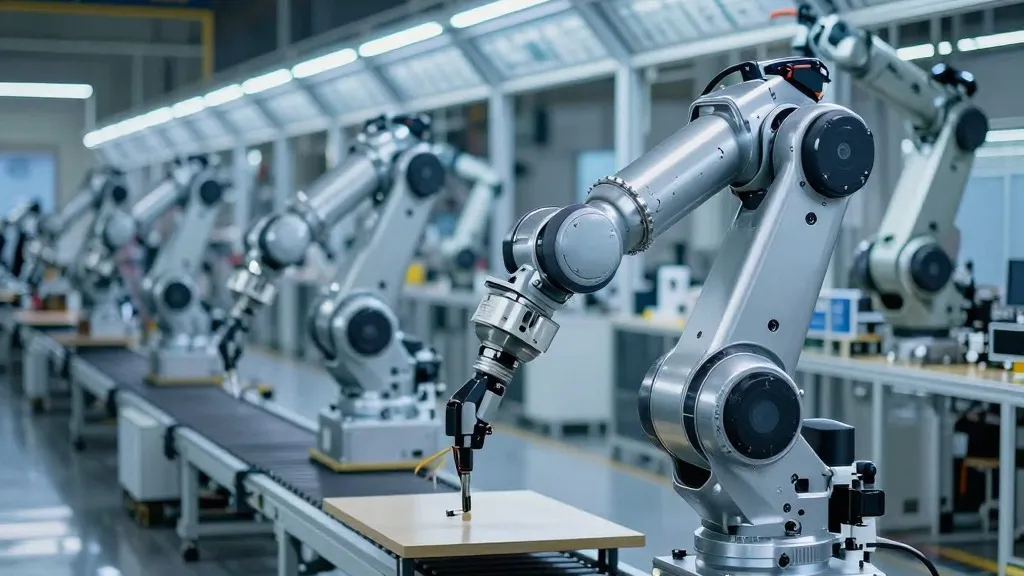
Musk stated that early production has commenced on Tesla’s high-volume assembly line in Fremont, California, a facility previously dedicated to Model S and Model X vehicles. While the majority of the line is installed to support a theoretical capacity of one million units annually, or roughly 20,000 per week, Musk acknowledged that reaching this rate will take at least another year. He attributed the delay to ongoing design changes in the electromechanical components, particularly the reliability of custom gears and the complex assembly of the robotic hands.
The hands remain the most critical hardware hurdle, according to Tesla engineers. Musk explained that the fingers must be soft enough to manipulate delicate objects while enduring constant mechanical wear, a challenge compounded by the fact that robots cannot heal their own skin. On the software side, the company is still refining its AI architecture. Lacking a large fleet of robots to gather real-world data like its automotive fleet does for Full Self-Driving, Tesla plans to build between 10,000 and 20,000 units to practice tasks in a dedicated training environment known as the Optimus Academy. The company also expects to integrate its AI5 chip into the robots by April 2027.
Tesla’s delay contrasts with the progress of competitors who are approaching similar milestones. XPeng, a Chinese automaker, activated an automated production line for its IRON robot in Guangzhou in September, with over 80% of core processes automated. XPeng aims for mass production by the end of 2026 and deliveries in the first half of 2027, targeting retail environments first. Meanwhile, Hyundai’s Boston Dynamics began producing its electric Atlas robot in January and has already committed all of its 2026 deployments, including partnerships with Google DeepMind. Boston Dynamics has opened a training center at Hyundai’s Metaplant in Georgia, where Atlas is learning to sequence car parts, and plans to deploy 25,000 robots across Hyundai’s plants over the coming years.
The timeline for Tesla’s Optimus has shifted repeatedly since 2024, when Musk first suggested internal use in 2025 and high-volume external production in 2026. By January 2025, he projected the building of 10,000 robots with several thousand performing useful work by year-end, a goal he later admitted was not met. The Q3 2026 shareholder letter described the units now coming off the Fremont line as the first "production-quality" bots, implying that earlier models were prototypes. This latest delay to late 2027 aligns with the broader industry struggle to create robots that can generalize to new tasks without extensive pre-programming.
Musk argued during the call that no other company is "even close" to Tesla in developing a general-purpose humanoid robot. However, competitors like Boston Dynamics have adopted pragmatic solutions, such as prioritizing sturdy grippers for industrial parts over human-like dexterity, to bypass the hand reliability issues plaguing Tesla. As the market for industrial automation grows, the race to deliver reliable, AI-driven humanoid robots intensifies, with Tesla, XPeng, and Boston Dynamics all aiming to capture the market for dangerous or repetitive labor tasks in the coming years.
Analysts note that while Tesla may have the most robots in the manufacturing pipeline, the difficulty lies in making them economically viable and useful in real-world scenarios. The company has promised a video within one to two months demonstrating Optimus performing unscripted tasks. If the demonstration meets expectations, it could validate the new late-2027 timeline; otherwise, the pattern of slipping deadlines may continue to challenge investor confidence in the project's near-term commercial potential.
Source: Electrek